CAA ‘Wave 2’ Reform Lets Microlight Hours Count Towards a Modular CPL

The UK Civil Aviation Authority has confirmed a change that will let flight time in three-axis microlights count towards the experience required for a Commercial Pilot’s Licence (CPL) taken via the modular route. The decision follows the CAA’s “Wave 2” consultation under its ongoing General Aviation Pilot Licensing Review, with more than 70% of respondents backing the change.
For anyone hour-building towards a professional licence, this matters. Renting a standard SEP aircraft for cross-country and general handling time is one of the biggest costs on the modular route to a CPL. Microlights are typically cheaper to hire and operate, so being able to log that time towards CPL requirements gives prospective commercial pilots a genuinely lower-cost stepping stone earlier in their training, rather than needing to move onto more expensive types from day one.
Part of a wider simplification
Wave 2 builds on the CAA’s broader Licensing and Training Simplification programme, the first phase of which came into force on 1 October 2025 for most aeroplane categories (15 September 2025 for sailplanes). That earlier package discontinued new issues of the Light Aircraft Pilot Licence (LAPL(A)) in the UK, meaning the CAA now issues only the NPPL(A) and Part-FCL PPL(A) for new applicants — though existing UK-issued LAPL(A) licences remain valid and usable.
The Part-FCL PPL(A) itself was also simplified, with a minimum requirement of 40 hours of flight time as pilot of aeroplanes, including at least 10 hours of supervised solo flying and a qualifying solo cross-country flight. Pilots who obtained an SSEA rating before 1 October 2025 were automatically deemed to hold the standard SEP rating, and training completed before that date continues to count towards SEP privileges now.
What’s next
A further, smaller package of amendments to the UK Aircrew Regulation and the Air Navigation Order is expected in summer 2026, covering items that were consulted on in 2024 but held back from the 2025 amendment. Combined with the Wave 2 microlight-hours change, it points to a steady loosening of the licensing framework for UK GA pilots rather than a single big-bang reform.
For UK microlight owners and instructors, the practical upshot is straightforward: hours flown in a properly logged three-axis microlight are no longer “just” microlight time. They can now form a real part of the paper trail towards a commercial licence, which may make microlight ownership and instruction more attractive to pilots with half an eye on a professional career.
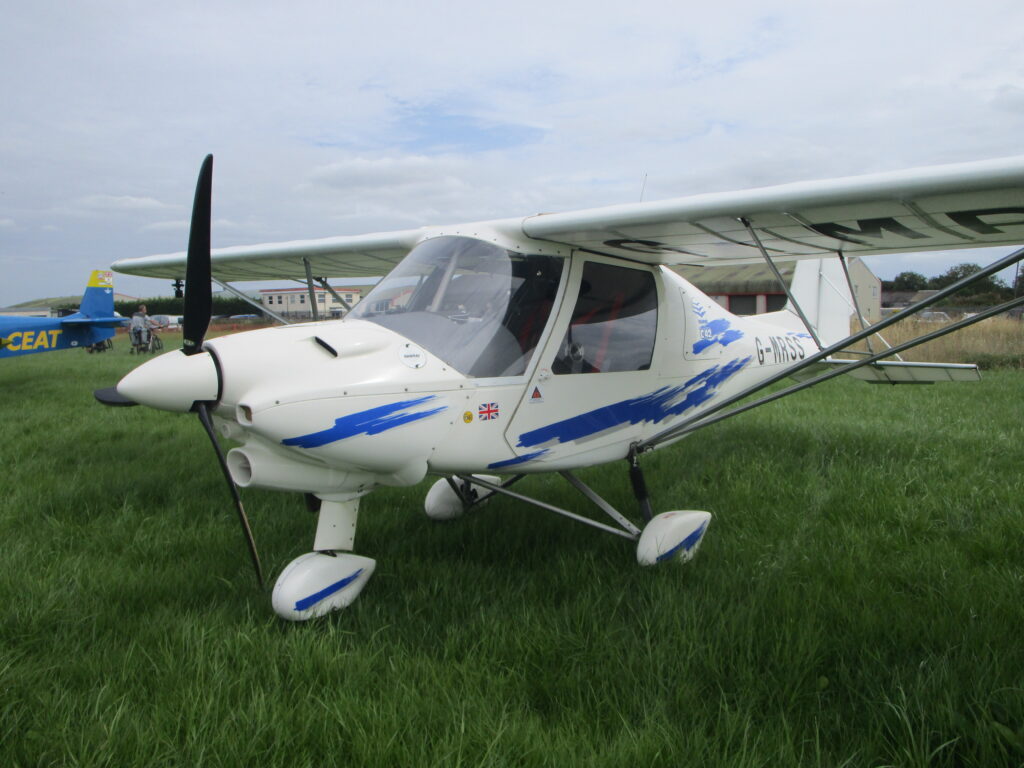
Image: Ikarus C42 microlight (G-MRSS), credit Georgiearl47, CC BY-SA 4.0, via Wikimedia Commons.